
Lagos at 59: Survival, Growth and Reinvention
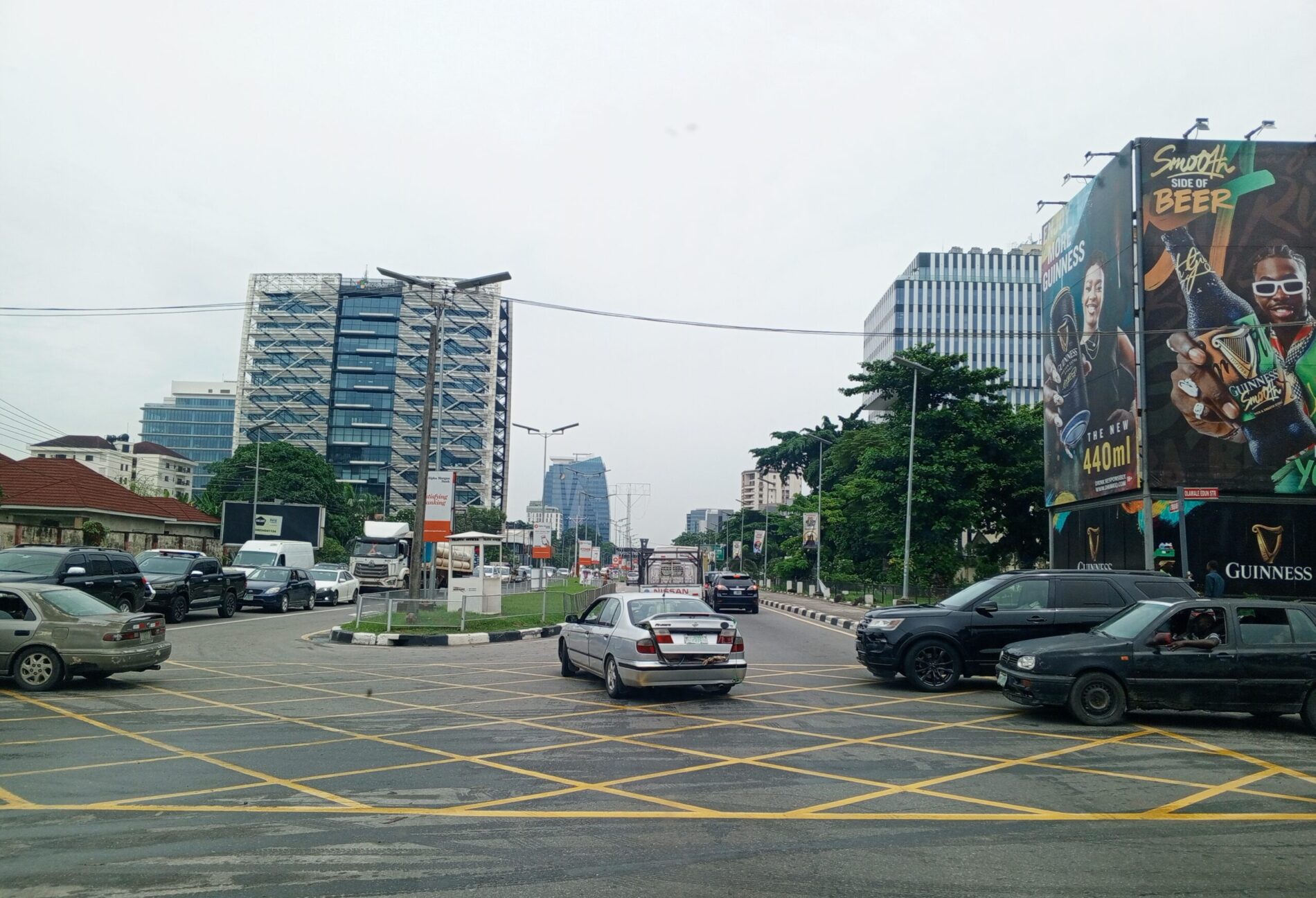
At 59, Lagos State stands not only as Nigeria’s commercial heartbeat but also as one of Africa’s most influential urban economies. Restless, energetic, overcrowded, and relentlessly ambitious, Lagos has evolved into a city whose influence stretches far beyond Nigeria’s borders. From the endless movement along Third Mainland Bridge to the buzzing markets of Balogun, the high-rise skyline of Victoria Island, and the crowded yellow buses weaving through Oshodi, Lagos represents the promise of modern African urbanization.
Since its creation on May 27, 1967, Lagos State has undergone one of the most remarkable urban transformations on the African continent. Established under the State Creation and Transitional Provisions Decree No. 14 1967, during General Yakubu Gowon’s military administration, Lagos emerged at a period of deep national uncertainty as Nigeria grappled with political instability and civil conflict. What began as a relatively modest coastal territory of fishing communities, colonial districts, and trading settlements has since grown into a megacity that drives Nigeria’s economy, shapes its politics, and defines much of its cultural identity.
Long before Nigeria gained independence in 1960, Lagos had already established itself as a strategic colonial port city and administrative centre under British rule. Due to its coastal location and maritime importance, it became the focal point of commerce and governance in colonial Nigeria. Even after the federal capital moved from Lagos to Abuja in 1991, the state retained its dominance as the nation’s economic nerve centre. In many ways, Lagos did not merely survive the loss of capital status, it reinvented itself beyond it.
Today, Lagos is widely regarded as the engine room of Nigeria’s economy. Though it remains Nigeria’s smallest state by landmass, covering approximately 3,577 square kilometres, its economic influence is unmatched within the country. According to various economic assessments and reports from the Lagos Bureau of Statistics and the National Bureau of Statistics, Lagos contributes more than one-quarter of Nigeria’s Gross Domestic Product and hosts a significant percentage of the nation’s industrial, financial, and commercial activities. The state’s ports process the majority of Nigeria’s maritime imports and exports, while sectors such as banking, telecommunications, real estate, manufacturing, transportation, and technology continue to fuel economic growth.
The scale of Lagos’ economy has increasingly drawn global attention. Some reports estimate that if Lagos were an independent country, its economy would rank among the largest in Africa. The state’s internally generated revenue consistently surpasses that of most other Nigerian states combined, making Lagos one of the most fiscally independent subnational governments on the continent. This financial strength has enabled successive administrations to pursue ambitious infrastructural and urban development projects without depending entirely on federal allocations.
Yet Lagos is more than an economic giant. Politically, the state occupies a unique place in Nigeria’s democratic journey. Throughout Nigeria’s history, Lagos has served as a centre of resistance, activism, and political consciousness. During colonial rule, nationalist movements found strong footing in Lagos. Under military regimes, the city became a major site of pro-democracy struggles, civil protests, and media activism. The June 12 movement, which emerged after the annulment of the 1993 presidential election, found some of its strongest expressions in Lagos. Decades later, the EndSARS protests of 2020 once again demonstrated the city’s role as a centre of political mobilization and youth activism.
Lagos has also produced some of Nigeria’s most influential political figures and institutions. Beyond personalities, however, the state’s real political importance lies in its diversity. Millions of Nigerians from different ethnic, religious, and social backgrounds live and work in the state, making it perhaps the country’s most cosmopolitan environment. In Lagos, Igbo traders, Hausa businessmen, Yoruba entrepreneurs, expatriates, tech innovators, entertainers, and artisans coexist within the same urban ecosystem.
This diversity is largely driven by migration. Every day, thousands reportedly enter Lagos in search of employment, education, survival, and opportunity. For many Nigerians, Lagos remains the ultimate destination for ambition. The city attracts university graduates, small-scale traders, entertainers, software developers, and labourers alike, all hoping to build a better future. It is this constant human movement that has transformed Lagos into one of the fastest-growing urban centres in the world.
But growth has come at an enormous cost.
At 59, perhaps the greatest challenge confronting Lagos is the pressure placed on its infrastructure by rapid urbanization. Roads originally designed for a much smaller population now carry millions of commuters daily. From the traffic gridlock around Apapa and Oshodi to the exhausting rush-hour movement across Ikorodu Road and Lekki-Epe Expressway, transportation remains one of the defining frustrations of life in Lagos. The city often appears to be expanding faster than its infrastructure can sustain.
Housing shortages remain another pressing issue. While affluent districts such as Ikoyi, Lekki, Banana Island, and Victoria Island continue to witness rapid luxury real estate development, millions of residents still live in overcrowded informal settlements lacking adequate sanitation, electricity, drainage systems, and potable water. The contrast between wealth and poverty in Lagos is often stark and deeply visible. Gleaming skyscrapers overlook struggling waterfront communities, while luxury estates exist only a few kilometres away from densely populated slums.
Flooding has equally become a recurring urban crisis. Climate change, rising sea levels, poor drainage systems, and uncontrolled urban expansion into wetlands continue to expose many communities to environmental risks. During heavy rainfall, several parts of the city become temporarily inaccessible, disrupting transportation, businesses, and daily life. Coastal erosion along the Atlantic corridor also presents long-term threats to sections of the state.
Security and unemployment remain additional concerns. Although Lagos continues to attract investment and opportunities, economic inequality has contributed to rising social tension in some areas. Population pressure has also stretched public healthcare, education, waste management, and transportation systems beyond comfortable limits.
Still, despite its many challenges, Lagos has recorded remarkable developmental strides over the past decades. Since Nigeria’s return to democratic rule in 1999, successive administrations have embarked on aggressive reforms aimed at modernizing the state and strengthening institutional governance. Analysts frequently cite reforms introduced during the administrations of Bola Ahmed Tinubu, Babatunde Fashola, Akinwunmi Ambode, and Babajide Sanwo-Olu as critical turning points in Lagos’ urban development trajectory.
Transportation infrastructure remains one of the state’s most visible achievements. The Bus Rapid Transit (BRT) system introduced a more structured public transportation model and became a reference point for urban mobility reforms in other African cities. More recently, the commissioning of the Lagos Blue Rail Line and progress on the Red Line project have signalled efforts to reduce road dependence and modernize mass transit infrastructure.
Another major success story lies in Lagos’ emergence as Africa’s leading technology and innovation hub. The Yaba axis, often nicknamed “Yabacon Valley,” has evolved into a thriving ecosystem for startups, fintech companies, software developers, and digital entrepreneurs. International technology firms and investors increasingly view Lagos as one of Africa’s most promising innovation markets. Nigeria’s booming fintech industry, much of which is headquartered in Lagos, has further elevated the city’s global relevance in the digital economy.
Culturally, Lagos is one of Africa’s most powerful creative capitals. The city is the heartbeat of Nollywood, Afrobeats, fashion, nightlife, and youth culture. From the legendary influence of Fela Kuti in shaping Afrobeat music to the global success of contemporary stars such as Burna Boy and Wizkid, Lagos has consistently projected Nigerian culture onto the global stage. Areas such as Surulere, Ojuelegba, and Yaba have become cultural landmarks associated with music, art, street fashion, and urban creativity. The city’s entertainment industry not only shapes African pop culture but also contributes significantly to employment and economic diversification.
The greatest challenge of the state is sustainability. Urban planning, environmental protection, affordable housing, transportation efficiency, and social inclusion will determine whether Lagos can successfully transition from a rapidly growing megacity into a truly livable global city.
At the same time, Lagos continues to attract massive international investments. Major infrastructure projects such as the Lekki Deep Sea Port, the Dangote Refinery corridor, and the Eko Atlantic project symbolize the state’s ambition to position itself as a globally competitive commercial destination. The Lekki Free Trade Zone, in particular, has become a major focal point for industrial development, manufacturing, and foreign direct investment. Supporters view these projects as evidence that Lagos is gradually transforming into a modern African megacity capable of competing with global economic centres.
Environmental sustainability will equally determine the future of Lagos. As one of the world’s major coastal cities, Lagos faces increasing vulnerability to climate-related threats, particularly flooding and rising sea levels. Urban experts have consistently warned that unregulated construction, inadequate drainage systems, and encroachment on wetlands could intensify environmental risks if not properly addressed. The challenge for Lagos is therefore not only economic growth, but growth that is environmentally sustainable and socially inclusive.
As Lagos marks its 59th anniversary, the state stands at a critical point in its development journey. Its future will depend not merely on economic expansion, but on the quality of governance, urban planning, infrastructure management, and social inclusion that shape the lives of its residents. The challenge ahead is clear: how can Lagos continue to grow without becoming overwhelmed by its own success?
At 59, Lagos remains more than a state. It is an idea; a symbol of movement, survival, aspiration, and reinvention. It is a city constantly negotiating between chaos and progress, tradition and modernity, hardship and opportunity. And for millions across Nigeria and beyond, Lagos remains what it has always been: difficult to live in, impossible to ignore, and endlessly full of possibilities.

Nice piece